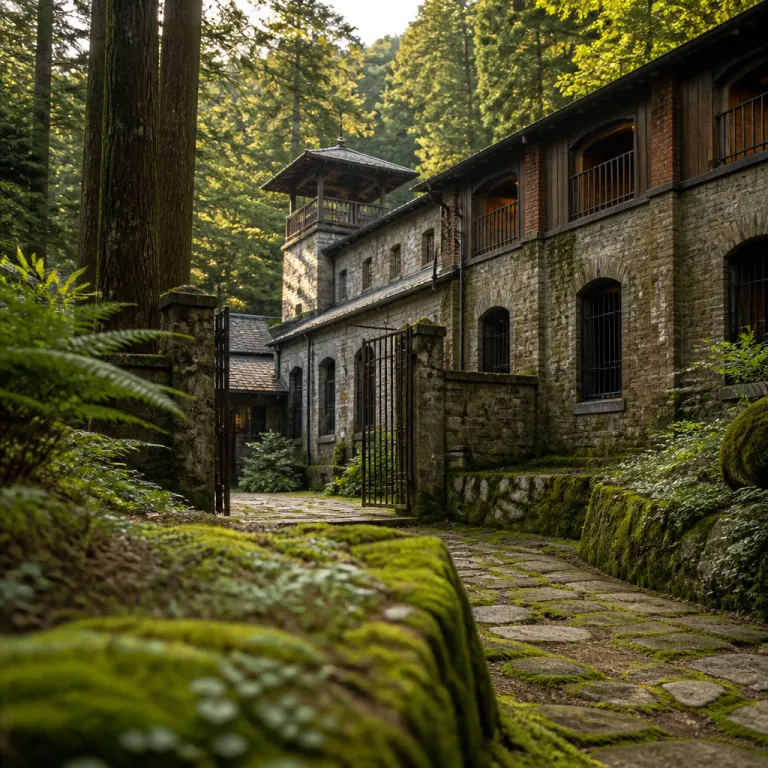
From meiji era prison to Hoshinoya Nara Prison luxury hotel
The former Nara Prison now anchors one of Japan’s most closely watched adaptive reuse projects, reborn as the Hoshinoya Nara Prison luxury hotel under the Hoshino Resorts brand. This Meiji era complex, completed in 1908 and later designated an Important Cultural Property by the Japanese government, once ranked among Japan’s so-called Five Great Prisons, and it remains the only one to survive in its original radiating plan with a central guardhouse and five wings extending outward across the site’s layered land history. For last minute travelers scanning Nara for a luxury hotel with genuine history and culture, this property offers a rare chance to sleep inside preserved brick walls that once defined a very different kind of stay.
Architect Rie Azuma of Azuma Environmental Architectural Research Institute led a multi-year restoration, announced in 2017 and culminating in the 2024 opening of the hotel, that treated the prison as both cultural property and future-facing accommodation. The team worked with Hoshino Resorts to retain the iconic red brick envelope and historic walls of the Meiji era structure, while inserting contemporary guest rooms, spa facilities, and onsen-style baths that meet current expectations for Japan luxury resorts. In interviews, Azuma has described the approach as “listening to the building’s memory,” and the result is a Hoshinoya Nara property where the original design logic of surveillance and control has been inverted into a calm, almost monastic hospitality experience for independent travelers who value time, space, and quiet.
Each of the 48 suites in this Hoshinoya Nara Prison luxury hotel has been carved from clusters of nine to eleven former cells, with the old prison doors and brick walls now framing generous guest rooms. Hand-laid red brick that sat hidden beneath plaster for decades has been carefully exposed, and new iron pillars and warm wood paneling introduce distinct themes in each wing without erasing the architectural heritage of the Nara Prison complex. A Japanese–French restaurant occupies the former detention wing, while a dedicated prison museum explores liberty, land history, and the evolution of great prisons in Japan, drawing on materials published by Hoshino Resorts and official heritage registry entries to document the site’s transformation.
Adaptive reuse, distinct themes and the future of japan luxury resorts
For travelers who follow design-led hotels, Hoshinoya Nara Prison luxury hotel sits in the same conversation as other adaptive reuse icons where industrial or civic structures become high-end rooms. The radiating plan of the original prison complex, designed by architect Keijiro Yamashita and influenced by contemporary panopticon-style surveillance thinking, now organizes guest circulation through five wings that each carry distinct themes in color, light, and material. This is not a generic Japan luxury conversion; it is a case study in how to respect architectural heritage while still delivering a fully contemporary luxury hotel experience.
Hoshino Resorts positions the Hoshinoya brand alongside its KAI hot spring inns and its more casual OMO city hotels, but this Nara property pushes the group’s adaptive reuse ambitions further. The Hoshinoya Nara suites use the former prison corridors as quiet galleries, with views into interior courtyards that remain enclosed by historic walls and iconic red brick. Across the portfolio, Hoshino Resorts has experimented with different land history narratives, yet the Nara Prison museum on site makes this property unusually explicit about history, culture, and the responsibilities that come with operating inside a protected cultural property.
Travelers familiar with other conversions, such as island fortresses and dockside warehouses turned into destination hotels, will recognize similar tensions between preservation and comfort. At Hoshinoya Nara Prison luxury hotel, the design team chose to keep the brick walls legible in the guest rooms, rather than hiding them behind drywall, which keeps the Meiji era presence visible in daily rituals. That decision, combined with the open courtyards and carefully lit corridors, turns what could have been a themed prison hotel into a serious architectural statement about Japan luxury, time, and memory.
Last minute stays, timing and the new language of prison luxury
For spontaneous travelers, the timing of a stay at Hoshinoya Nara Prison luxury hotel matters almost as much as the design. Landmark openings like this Nara hotel typically sell out in the first weeks, then settle into a rhythm where cancellation patterns create sudden pockets of availability in prime guest rooms and suites. That is when a last minute booking can secure a prison Hoshinoya suite with views of the iconic red brick walls at a rate that reflects real-time demand rather than pure launch hype, especially outside peak cherry blossom and autumn foliage seasons.
The property’s spa, onsen-style baths, and playroom sit within the old prison perimeter, turning once restricted yards into contemplative spaces that feel far removed from the city, even though central Nara lies only a short taxi ride away and Kansai International Airport is reachable in around ninety minutes by rail and car. Interior courtyards are treated as outdoor rooms, and the historic walls filter sound so that the hotel feels almost cloistered despite its urban address in Japan. In this context, the privacy policy of the operator, Hoshino Resorts, becomes more than a legal document, because guests are acutely aware that the land history and former use of the site involved surveillance rather than discretion.
Material choices at Hoshinoya Nara echo broader architectural trends in luxury resorts, where original structures are celebrated rather than erased, a movement explored in depth by architects and heritage specialists who track the materials revolution in high-end hotel design. Here, the red brick and brick walls of the Meiji era prison are left visible, while new Japanese-crafted joinery, soft textiles, and carefully calibrated lighting soften the experience without denying the building’s past. As Hoshino Resorts notes in its own materials, “What is Hoshinoya Nara Prison? A luxury hotel converted from a historic prison,” a description that neatly captures the balance between heritage and contemporary comfort.